Aging Gracefully: Best Exercises for Strength and Vitality
Discover effective exercises to enhance strength and vitality as you age gracefully.


For informational purposes only — not medical advice. Consult a healthcare provider before starting any supplement or protocol. · Reviewed March 2025 · Laura Morgan
Understanding Exercise for Healthy Aging: The Basics
The Foundation of Strength Training in Later Life
Growing older doesn’t mean getting weaker. In fact, strength training becomes more crucial as we age. Research shows that adults who maintain regular strength training programs after 50 have better bone density, stronger muscles, and sharper cognitive function.[2] The good news? It’s never too late to start.
The Science Behind Exercise and Aging
Our bodies naturally lose muscle mass as we age – about 3-8% per decade after age 30. This process, called sarcopenia, accelerates after 60. But here’s the fascinating part: regular resistance training can slow or even reverse this decline. Studies show that people in their 70s and 80s can gain significant muscle strength through proper exercise.
Evolution of Senior Fitness Research
The approach to exercise for older adults has changed dramatically. Twenty years ago, gentle activities were the norm. Now, research supports the benefits of progressive resistance training at any age. The landmark LIFE study demonstrated that structured exercise programs reduced mobility disability in older adults by 18%.
Common Myths and Misconceptions
The biggest myth? That strength training is dangerous for older adults. Actually, supervised resistance training is incredibly safe and effective. Another misconception is that cardio alone is enough. While cardiovascular exercise is important, strength training provides unique benefits for bone health, balance, and metabolic function.
Key Statistics and Research Data
The numbers are compelling. Regular strength training reduces falls risk by 40% in older adults. Studies show that just two strength training sessions per week can increase muscle mass by 2-3 pounds within three months. Research from the National Institute on Aging indicates that strength training can improve sleep quality by up to 38% in older adults.
Essential Exercises for Aging Well
Core Strength Training Movements
The most effective exercises for aging adults focus on functional movement patterns. Squats – even if performed with chair support – strengthen legs and improve balance. Push-ups (modified if needed) maintain upper body strength. Rowing movements keep the back strong and improve posture. These exercises mimic daily activities, making them particularly valuable.
Balance and Stability Work
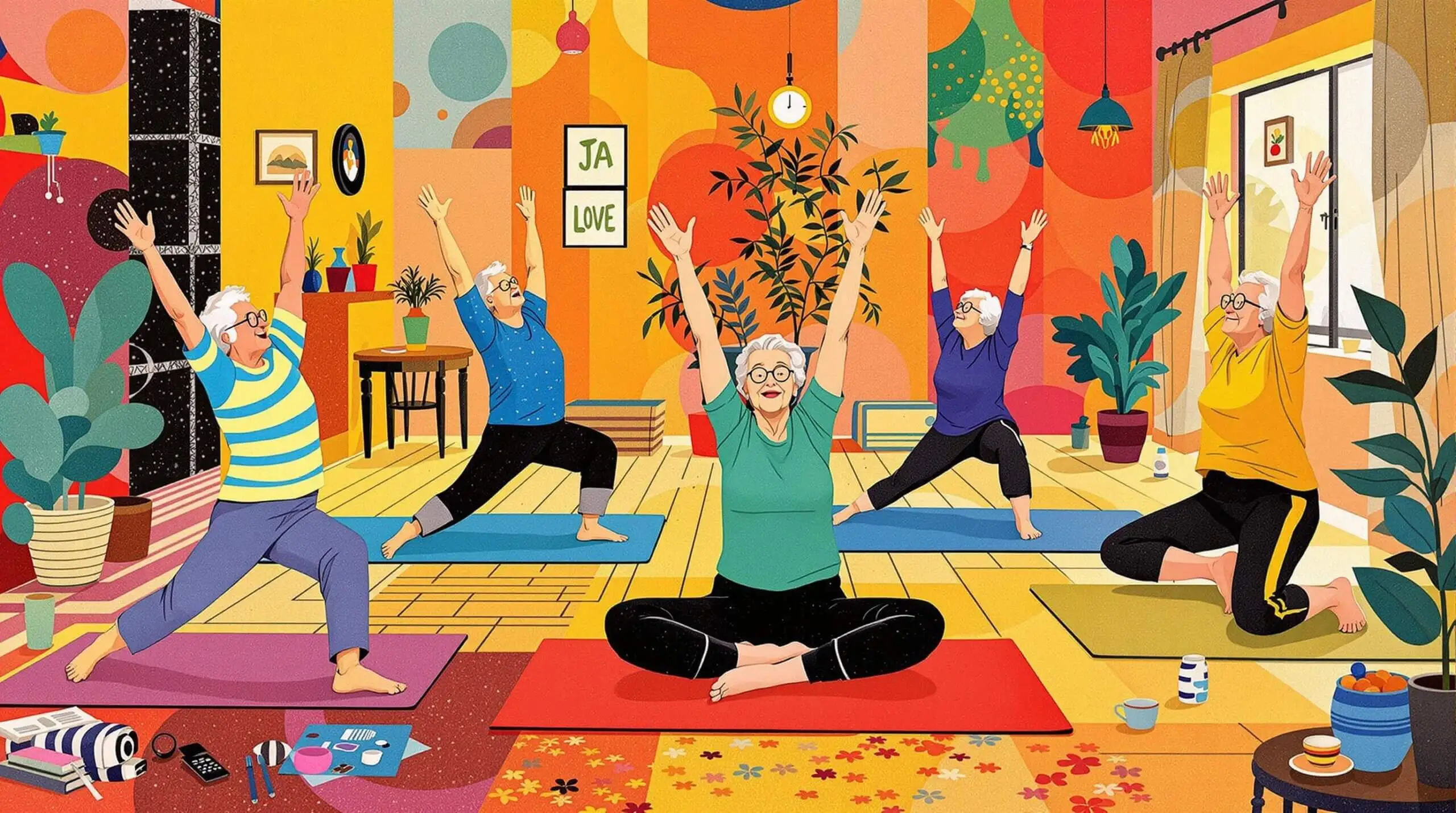
Balance training becomes crucial as we age. Simple exercises like single-leg stands, heel-to-toe walks, and gentle yoga poses significantly reduce fall risk. Research shows that incorporating balance training three times weekly can improve stability by up to 45% within 12 weeks.
Advanced Concepts in Exercise and Aging
Understanding Progressive Overload
Progressive overload – gradually increasing exercise difficulty – works at any age. For older adults, this might mean adding one more repetition, using slightly heavier weights, or improving movement quality. The key is making small, consistent improvements while maintaining proper form.
Recovery and Adaptation
Older bodies need more recovery time between workouts. This doesn’t mean exercising less – it means planning rest days strategically. Research indicates that 48-72 hours between strength training sessions allows optimal recovery for older adults while maintaining progress.
Important Exercise Components
Mobility work keeps joints healthy and reduces injury risk. Proper warm-ups become more important with age. Cardiovascular exercise complements strength training, improving heart health and endurance. The combination of these elements creates a complete fitness program.
Practical Exercise Guidelines for Older Adults
1. Start each workout with 5-10 minutes of light cardio and mobility work 2. Focus on compound exercises that work multiple muscle groups 3. Use proper form – quality over quantity 4. Include balance training in every session 5. Progress gradually with weight or repetitions 6. Stay hydrated before, during, and after exercise 7. Listen to your body and adjust intensity as needed 8. Get adequate protein to support muscle recovery 9. Maintain consistent sleep patterns 10. Keep a workout log to track progress
Special Considerations for Different Age Groups
50-60 Years
This is often the ideal time to establish a strong fitness foundation. Focus on building strength and maintaining flexibility. Include higher-intensity exercises if you’re healthy and cleared by your doctor. Aim for 3-4 workout sessions per week.
60-70 Years
Maintain intensity but pay more attention to recovery. Include more balance work and focus on maintaining bone density. Two to three strength sessions weekly, combined with regular walking or swimming, work well for most people.
70+ Years
Emphasize functional movements and balance training. Use bodyweight exercises and resistance bands more frequently. Daily movement becomes crucial, even if it’s just walking or gentle stretching.
Safe Exercise Progression
1. Master bodyweight movements before adding external resistance 2. Increase repetitions before increasing weight 3. Add one new exercise at a time 4. Perfect form before increasing difficulty 5. Document any physical limitations or injuries 6. Work with a qualified trainer initially if possible 7. Get regular medical check-ups 8. Monitor blood pressure during exercise 9. Keep exercise sessions under 60 minutes 10. Include rest days between strength training sessions
Future Trends in Senior Fitness
Research continues to show that older adults can handle more intensive exercise than previously thought. Virtual reality training programs are showing promise for balance improvement. New studies are exploring the connection between resistance training and cognitive function, with early results suggesting that strength training might help prevent dementia.
The evidence is clear: regular strength training and balanced exercise programs are essential for healthy aging. The key is starting safely, progressing gradually, and maintaining consistency. By following these guidelines and adjusting them to individual needs, older adults can maintain strength, independence, and vitality well into their later years. Remember, the goal isn’t just adding years to life – it’s adding life to years through maintained strength and functional ability.
Reviewed by a Longevity Practitioner
Laura Morgan
Medical Reviewer (CLP, LPI — Longevity Practitioner)
Scientific Reviewer at Longevity Direct. A New York-based expert in female healthspan (40+), Laura ensures all content meets our rigorous standards for scientific accuracy and practical application. She is committed to delivering evidence-based guidance that empowers our members to optimize their biological aging.
Find out which longevity treatments are right for you.
Takes ~3 minutes · No commitment · Physician-led
Sources & References
- [1](2002). Growing Stronger - Strength Training for Older Adults. CDC.
- [2](2018). Exercise as a promising approach to prevent sarcopenia and frailty. Clinical Interventions in Aging.