Brain Games & Aging: Do Puzzles Keep You Young?
Exploring the impact of puzzles and brain games on maintaining cognitive function as we age.


For informational purposes only — not medical advice. Consult a healthcare provider before starting any supplement or protocol. · Reviewed December 2025 · Laura Morgan
Understanding Brain Games and Cognitive Aging
The Brain Training Phenomenon
Brain games have exploded in popularity, with millions downloading apps and buying puzzle books in hopes of keeping their minds sharp. The global brain training market now exceeds $3 billion annually[1] – but does the science support all the hype? This question matters deeply for anyone interested in maintaining cognitive function as they age.
The Science Behind Neural Plasticity
Our brains remain remarkably adaptable throughout life, thanks to neuroplasticity – the brain’s ability to form new neural connections. When we engage in mentally challenging activities, we create and strengthen these connections. Think of it like building new roads in a city – the more routes available, the better the traffic flow. Research shows that mentally stimulating activities can increase the density of neural networks, potentially providing a buffer against cognitive decline.
History of Brain Training Research
Scientific interest in cognitive training dates back to the 1960s, but the field gained momentum in the early 2000s. The ACTIVE study, involving over 2,800 older adults, demonstrated that specific cognitive training could improve targeted abilities like memory and reasoning. However, the crucial question remained: Do these improvements translate to real-world benefits?
Common Misconceptions
The biggest myth? That any brain game will keep your mind young. The truth is more nuanced. While certain cognitive exercises can improve specific skills, many commercial brain training programs oversell their benefits. Another misconception is that crossword puzzles alone can prevent dementia – while they’re beneficial, maintaining cognitive health requires a more comprehensive approach.
Key Statistics and Research Findings
Recent studies paint an interesting picture. Research published in the Journal of the American Geriatrics Society found that adults who regularly engaged in mentally stimulating activities had a 32% lower risk of cognitive decline. A 2020 meta-analysis revealed that brain training games showed modest but consistent benefits for attention and processing speed in older adults.
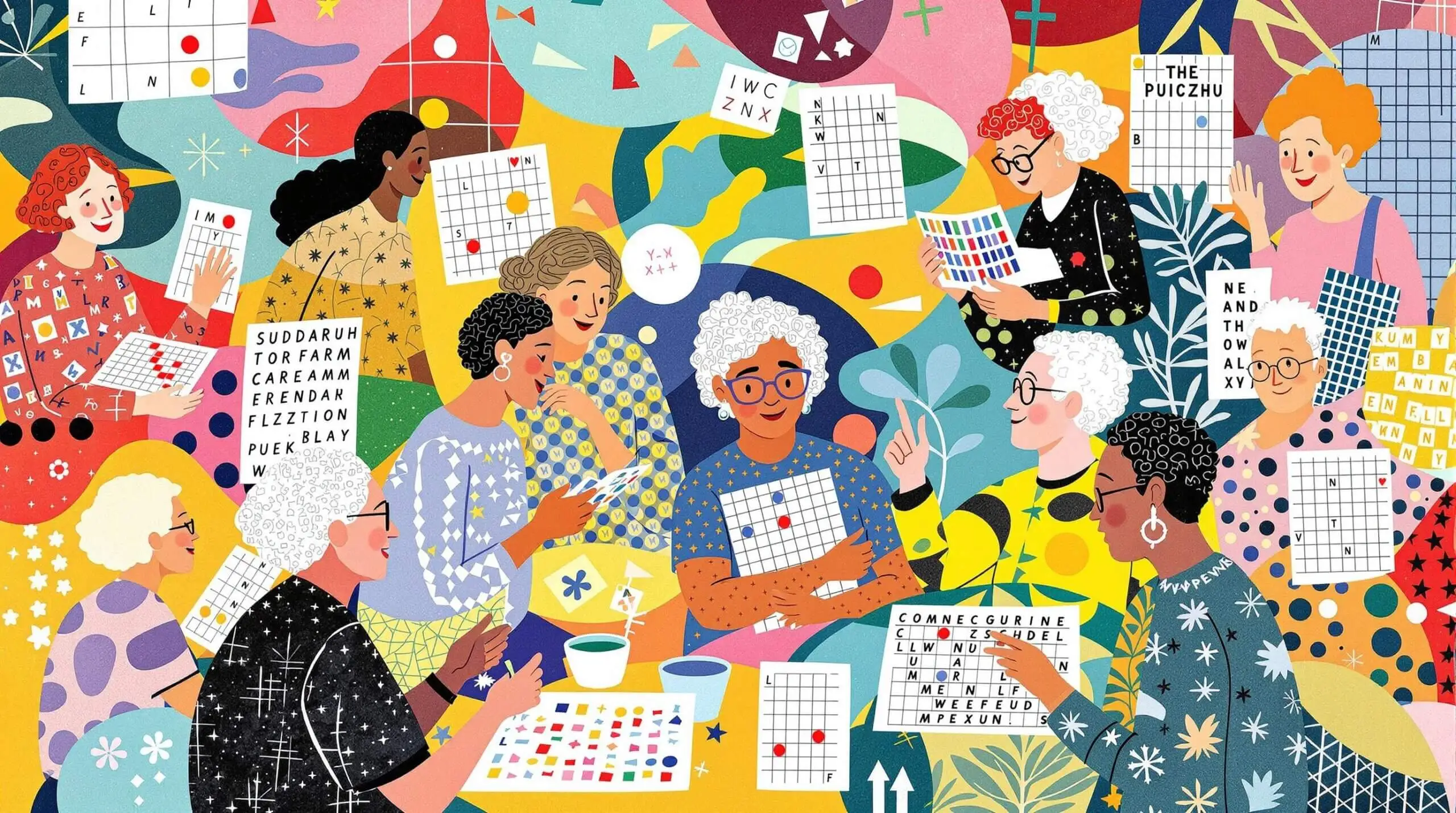
The Current State of Brain Training
Types of Cognitive Exercises
Modern brain training encompasses various activities:
- Digital brain training apps and games
- Traditional puzzles (crosswords, Sudoku)
- Memory exercises
- Logic problems
- Language learning
- Musical instruments
- Strategy games
- Social engagement activities
Evidence-Based Benefits
Research shows specific cognitive exercises can improve:
- Processing speed
- Working memory
- Executive function
- Visual-spatial skills
- Attention span
The Mechanisms of Brain Training and Aging
How Brain Games Affect Neural Circuits
Cognitive training works by challenging neural pathways. When we solve puzzles or learn new skills, our brains create fresh synaptic connections. Brain imaging studies show increased activity in regions responsible for memory and learning during these tasks. Regular mental exercise appears to maintain and even expand these neural networks.
The Role of Cognitive Reserve
Cognitive reserve – our brain’s ability to find alternate ways of getting things done – grows stronger with mental exercise. It’s like having backup generators for a power grid. People with higher cognitive reserve often show better resilience against age-related cognitive decline. Studies of nuns who regularly engaged in intellectual activities showed they maintained better cognitive function despite physical signs of brain aging.
Important Sub-Topics
Several factors influence the effectiveness of brain training:
- Frequency and intensity of cognitive exercise
- Variety of mental challenges
- Individual baseline cognitive function
- Age when starting brain training
- Overall brain health factors
Practical Strategies for Cognitive Enhancement
Effective Brain Training Methods
- Choose challenging but enjoyable activities
- Mix different types of cognitive exercises
- Maintain consistent practice schedules
- Gradually increase difficulty levels
- Combine mental exercise with physical activity
- Engage in social learning activities
- Learn new skills or hobbies
- Practice mindfulness and meditation
- Ensure adequate sleep and nutrition
- Monitor progress with cognitive assessments
Real-World Applications
Daily Cognitive Enhancement Activities
Simple ways to incorporate brain training into daily life:
- Read challenging material
- Learn a musical instrument
- Study a new language
- Play strategy games
- Engage in creative writing
- Practice mental arithmetic
- Join discussion groups
- Take up photography or art
The Future of Brain Training
Scientific advances are reshaping brain training. Virtual reality applications now offer immersive cognitive exercises. Artificial intelligence is enabling more personalized training programs based on individual performance patterns. Research continues into novel approaches like transcranial magnetic stimulation combined with cognitive training.
Emerging Research Areas
Current studies focus on:
- Long-term effects of digital brain training
- Combined physical-cognitive training programs
- Social aspects of brain training
- Genetic factors in cognitive response
- Neural mechanisms of skill transfer
Comprehensive Brain Health Approach
Brain games work best as part of a broader strategy:
- Regular physical exercise
- Healthy diet rich in omega-3s and antioxidants
- Quality sleep habits
- Stress management
- Social engagement
- Cardiovascular health maintenance
- Regular medical check-ups
Brain games and puzzles can indeed contribute to cognitive health, but they’re not a magic bullet for preventing aging. The evidence suggests that regular mental exercise, as part of a comprehensive healthy lifestyle, helps maintain cognitive function. The key lies in consistent, varied, and challenging mental activities combined with physical exercise, good nutrition, and social engagement. While we can’t stop aging, we can build cognitive reserve that helps our brains age more gracefully.
Remember that cognitive health is a lifelong journey. Starting brain training early and maintaining it consistently offers the best chance of preserving mental sharpness into later years. Choose activities you enjoy – this makes it easier to maintain the habit and reap the long-term benefits of regular cognitive exercise.
Reviewed by a Longevity Practitioner
Laura Morgan
Medical Reviewer (CLP, LPI — Longevity Practitioner)
Scientific Reviewer at Longevity Direct. A New York-based expert in female healthspan (40+), Laura ensures all content meets our rigorous standards for scientific accuracy and practical application. She is committed to delivering evidence-based guidance that empowers our members to optimize their biological aging.
Find out which longevity treatments are right for you.
Takes ~3 minutes · No commitment · Physician-led
Sources & References
- [1](2024). Brain Training Software Market. Business Research Insights.
- [2](2024). The Role of Knitting and Crochet for Brain Health. Longevity Direct.
- [3](2024). Cognitive Reserve: Building Brain Buffers Against Aging. Longevity Direct.
- [4](2021). Cognitive Training to Maintain Cognitive Function in Older Adults. JAMA.