Sound Sleep: White Noise Machines and Aging Well
Explore how white noise machines can enhance sleep quality and contribute to aging well.

For informational purposes only — not medical advice. Consult a healthcare provider before starting any supplement or protocol. · Reviewed February 2026 · Laura Morgan
Understanding Sound Sleep and Its Impact on Aging
The Connection Between Sleep Quality and Longevity
Poor sleep doesn’t just leave you groggy – it can literally shorten your life. Research from the National Sleep Foundation shows that consistent, quality sleep is as crucial to longevity as diet and exercise. White noise machines have emerged as powerful tools in this quest for better sleep, offering a simple solution to a complex biological need.
The Science of White Noise and Sleep
White noise works by creating a blanket of sound across all frequencies. Think of it as an acoustic shield that masks disruptive sounds – from traffic to creaking floors. Studies published in Sleep Medicine show that consistent background noise can reduce the time it takes to fall asleep by up to 38%. This isn’t just about comfort – it’s about supporting your body’s vital regenerative processes.
Historical Context and Modern Applications
The use of sound for sleep dates back centuries, from the rhythmic drums of ancient cultures to the modern hum of air conditioners. But it wasn’t until the 1960s that researchers began documenting white noise‘s scientific benefits. Today’s machines offer various sound options, from pure white noise to nature sounds, all backed by sleep science.
Common Misconceptions About White Noise
Many believe white noise machines create dependency. The evidence suggests otherwise – they’re tools, not crutches. Another myth is that any background noise will do. In fact, irregular or inconsistent sounds can disrupt sleep patterns. The key is finding the right type and volume of noise for your specific needs.
Current Research and Statistics
The numbers paint a clear picture: 75% of Americans report improved sleep quality with white noise. Studies show that consistent use can reduce nighttime awakenings by up to 45%. For older adults, who often experience more fragmented sleep, white noise can increase total sleep time by an average of 45 minutes per night.
White Noise Machines and Sleep Technology Today
Modern Features and Innovations
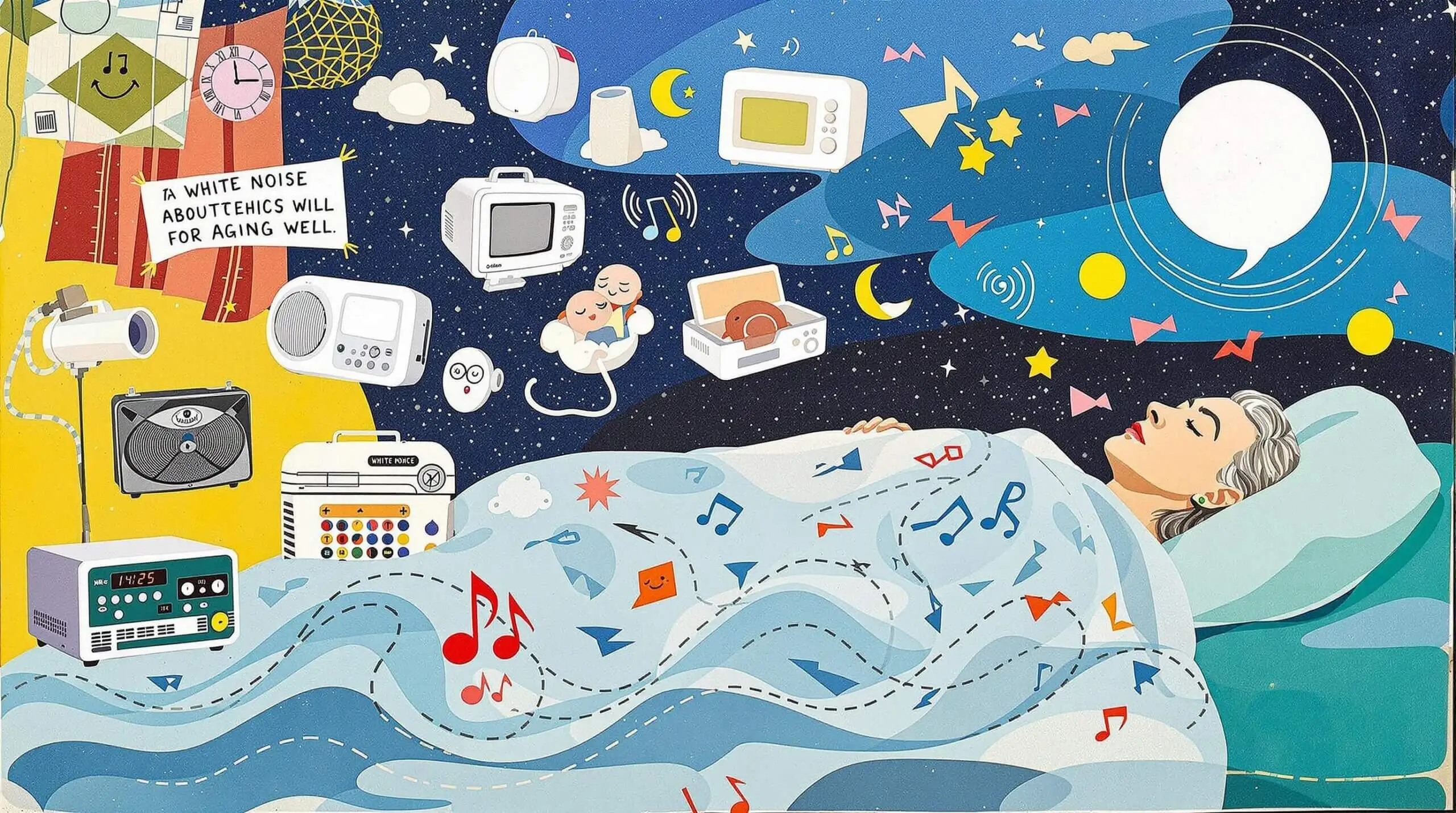
Today’s white noise machines pack impressive technology into small packages. Smart features include automatic volume adjustment, sleep tracking integration, and programmable schedules. Some devices even adapt to your room’s acoustics, creating optimal sound conditions for sleep.
Impact on Different Age Groups
While white noise benefits people of all ages, its effects are particularly notable in older adults. Research shows that people over 60 often experience more sleep disruptions. White noise can help compensate for age-related changes in sleep architecture, promoting deeper, more restorative rest.
The Biology of Sleep, Aging, and Sound
How White Noise Affects Brain Waves
White noise influences brain activity in fascinating ways. EEG studies reveal that it helps synchronize brain waves, promoting the transition from wakefulness to sleep. This synchronization becomes more important as we age, when natural sleep patterns often become less regular.
The Connection to Cellular Repair
Quality sleep directly impacts cellular repair and regeneration. During deep sleep, your body produces growth hormone, repairs tissue, and strengthens immune function. White noise can help maintain these crucial deep sleep phases, supporting your body’s natural restoration processes.
Key Areas of Impact
Several aspects of health benefit from improved sleep through white noise use. Cognitive function shows measurable improvement with better sleep quality. Memory consolidation, particularly affected by aging, strengthens with consistent deep sleep. Cardiovascular health also benefits from reduced nighttime stress responses.
Practical Guidelines for Using White Noise Machines
- Place the machine 3-6 feet from your bed for optimal sound distribution
- Set volume between 50-65 decibels (about the level of a soft shower)
- Choose a consistent sound rather than changing patterns
- Keep the machine clear of dust and obstructions
- Use timer functions to align with your sleep schedule
- Test different sound types (pink noise, brown noise, nature sounds)
- Ensure proper placement away from walls or surfaces that might reflect sound
- Clean or replace filters regularly if your machine has them
- Consider room acoustics when positioning the device
- Monitor battery life or maintain proper electrical connections
Advanced Features and Considerations
Smart Integration Options
Modern white noise machines often include smart features that enhance their effectiveness. App connectivity allows for remote control and customization. Some devices track sleep patterns and adjust automatically. These features can help fine-tune your sleep environment as your needs change with age.
Environmental Factors
Room temperature, humidity, and light levels all affect sleep quality. The best white noise machines include features that complement these environmental factors. Some models incorporate air purification or humidity control, creating a more complete sleep solution.
Tips for Maximizing Sleep Quality with White Noise
- Maintain a consistent bedtime routine
- Keep your bedroom cool (65-68°F)
- Use blackout curtains or eye masks
- Avoid blue light exposure before bed
- Practice relaxation techniques
- Stay hydrated but limit evening fluid intake
- Exercise regularly but not close to bedtime
- Consider your mattress and pillow quality
- Limit caffeine after mid-afternoon
- Create a dedicated sleep environment
Future Developments in Sleep Technology
Sleep technology continues to advance rapidly. New developments include AI-powered sound adjustment, integration with smart home systems, and personalized sleep profiles. Research into brain wave entrainment promises even more effective sleep solutions. These innovations focus on addressing age-specific sleep challenges.
Quality sleep stands as a cornerstone of healthy aging, and white noise machines offer a simple yet effective tool for improving sleep quality. The scientific evidence supporting their use is substantial, particularly for older adults who face unique sleep challenges. By understanding and properly using white noise technology, you can enhance your sleep quality and support your long-term health goals. Remember, good sleep isn’t a luxury – it’s a biological necessity that becomes increasingly important as we age.
Reviewed by a Longevity Practitioner
Laura Morgan
Medical Reviewer (CLP, LPI — Longevity Practitioner)
Scientific Reviewer at Longevity Direct. A New York-based expert in female healthspan (40+), Laura ensures all content meets our rigorous standards for scientific accuracy and practical application. She is committed to delivering evidence-based guidance that empowers our members to optimize their biological aging.
Find out which longevity treatments are right for you.
Takes ~3 minutes · No commitment · Physician-led
Sources & References
- [1](2023). Barefoot Living & Grounding’s Impact on Aging. Longevity Direct.
- [2](2023). Pros and Cons of Using White Noise Machines. Sleep Better NY.
- [3](2023). Aging and Sleep. Sleep Foundation.
- [4](2023). How quality sleep impacts your lifespan. Mayo Clinic Press.