Squatting for Life: Functional Fitness and Aging
Explore the vital role of squatting in enhancing functional fitness and promoting healthy aging.


For informational purposes only — not medical advice. Consult a healthcare provider before starting any supplement or protocol. · Reviewed September 2025 · Laura Morgan
Understanding Squatting and Its Role in Aging Well
The Fundamental Human Movement Pattern
The squat isn’t just an exercise – it’s a basic human movement that we’ve been doing since childhood. Watch any toddler pick up a toy, and you’ll see a perfect squat. Yet somewhere along the way, many of us lost this natural ability. The consequences? Reduced mobility, increased fall risk, and a faster decline in independence as we age.
Why Squatting Matters for Longevity
Research shows that the ability to get up from the floor independently predicts mortality risk in older adults. A 2012 study published in the European Journal of Preventive Cardiology found that adults who needed to use both hands and knees to get up from the floor were 6.5 times more likely to die within six years than those who could do it with minimal support.
The Science Behind Squatting
Squatting engages multiple muscle groups simultaneously, triggering a cascade of beneficial physiological responses. It stimulates the production of growth hormone and testosterone – crucial hormones that decline with age. Regular squatting also improves bone density, reduces arthritis risk, and enhances metabolic health.
Historical Context and Modern Relevance
Many traditional societies maintain squatting abilities well into old age. In parts of Asia and Africa, people regularly squat for rest, work, and social activities. This continuous practice preserves joint mobility and muscle strength. Modern research validates these traditional practices, showing that regular squatting can reverse age-related decline in physical function.
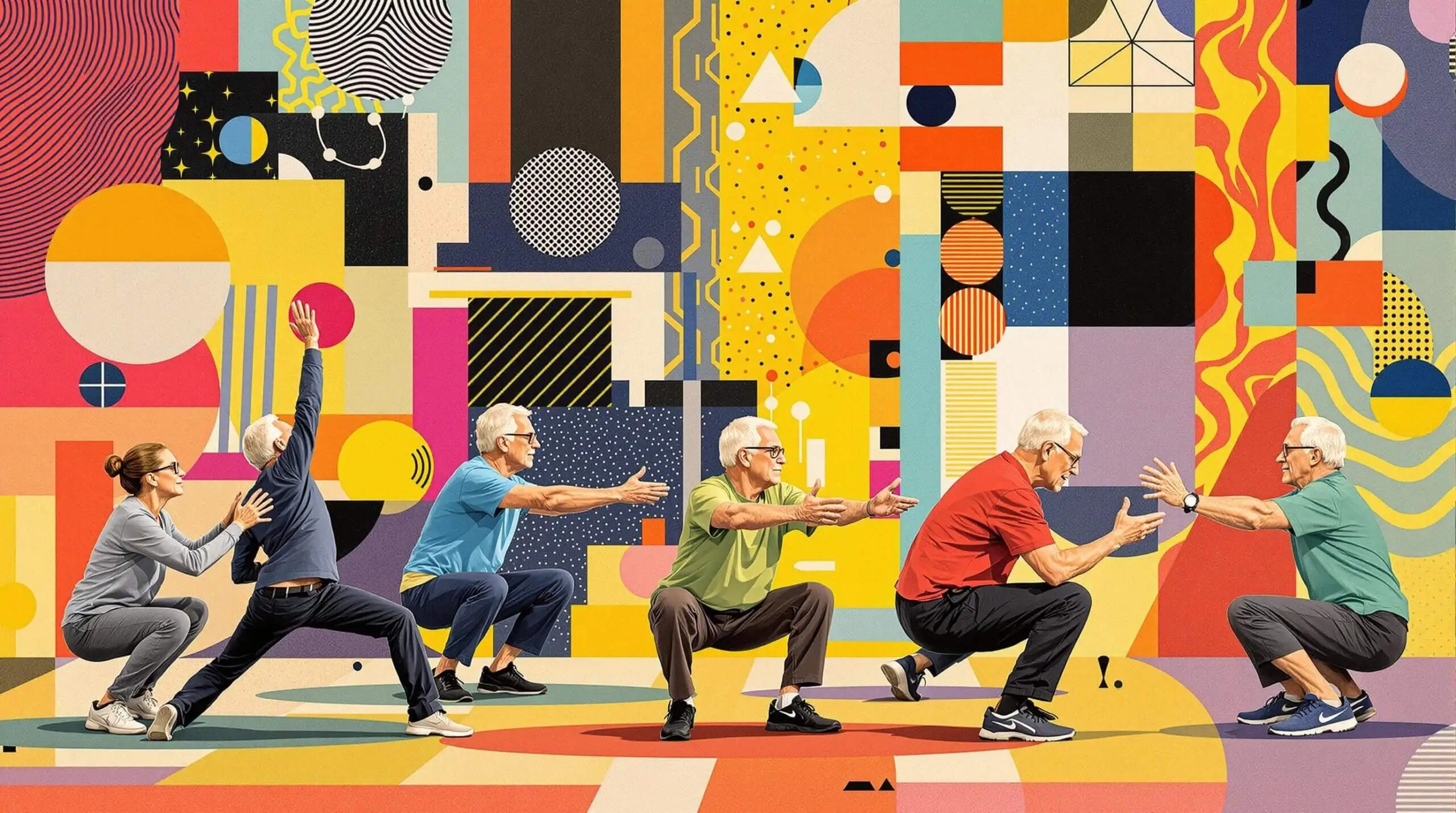
The Current Landscape of Functional Fitness and Aging
Modern Research on Squatting and Aging
Recent studies highlight squatting’s role in healthy aging. Research from the Journal of Strength and Conditioning Research demonstrates that older adults who maintain squatting ability show better balance, stronger bones, and fewer falls. The benefits extend beyond physical health – regular squatting is linked to improved cognitive function and reduced depression risk.
Different Types of Squats for Different Ages
The beauty of squatting lies in its adaptability. Beginners might start with supported squats using a chair or counter. As strength builds, bodyweight squats become possible. Advanced practitioners can add weights or try variations like single-leg squats. The key is progressive adaptation – starting where you are and gradually building capacity.
Mechanisms and Benefits of Regular Squatting
Physical Benefits
Squatting strengthens the entire lower body, including quadriceps, hamstrings, glutes, and core muscles. This comprehensive muscle engagement improves:
- Balance and stability
- Joint mobility
- Bone density
- Metabolic health
- Cardiovascular fitness
- Functional strength
Neurological Benefits
The squat pattern activates complex neural pathways, improving:
- Proprioception (body awareness)
- Motor control
- Cognitive function
- Balance reactions
- Neural plasticity
Hormonal Benefits
Regular squatting stimulates beneficial hormonal responses:
- Increased growth hormone production
- Better testosterone levels
- Improved insulin sensitivity
- Enhanced metabolic function
Practical Implementation of Squatting Practice
Starting a Squat Practice
Begin with these fundamentals:
- Assess current mobility
- Start with supported squats if needed
- Focus on proper form
- Progress gradually
- Practice regularly
Common Challenges and Solutions
Many older adults face specific challenges when squatting:
- Limited ankle mobility – Use heel lifts temporarily
- Poor balance – Practice near a stable surface
- Knee pain – Adjust depth and stance width
- Fear of falling – Start with supported variations
- Limited hip mobility – Practice hip stretches daily
Safety Considerations and Modifications
Essential Safety Guidelines
Safety must always come first:
- Get medical clearance if you have existing conditions
- Start with supervision from a qualified professional
- Never sacrifice form for depth
- Listen to your body’s signals
- Progress at your own pace
Squat Variations for Different Abilities
Multiple options exist for all fitness levels:
- Chair squats
- Wall slides
- TRX-supported squats
- Box squats
- Assisted squats
- Full bodyweight squats
- Weighted variations
Progressive Programming for Long-term Success
Weekly Practice Guidelines
- Aim for 2-3 squat sessions per week
- Start with 5-10 repetitions per set
- Build to 2-3 sets per session
- Rest 1-2 minutes between sets
- Include rest days between sessions
- Progress depth and complexity gradually
Integrating Squats into Daily Life
Natural opportunities for squatting include:
- Getting items from low shelves
- Gardening activities
- Playing with grandchildren
- Household chores
- Getting up from the floor
Future Perspectives on Functional Fitness and Aging
Emerging Research and Trends
New studies continue to reveal the importance of maintaining functional movements like squatting. Research focuses on how these movements affect:
- Brain health and cognitive function
- Cellular aging processes
- Genetic expression
- Longevity markers
- Quality of life metrics
Technology and Movement Assessment
Modern technology aids in squat assessment and training:
- 3D movement analysis
- Smart phone apps for form checking
- Wearable devices for tracking progress
- Virtual coaching platforms
- Remote monitoring systems
Maintaining the ability to squat isn’t just about exercise – it’s about preserving independence and quality of life as we age. The research is clear: regular squatting practice can significantly impact longevity and functional ability. By starting gradually, focusing on proper form, and progressing systematically, anyone can develop and maintain this essential movement pattern. The key is consistency and patience, remembering that every small improvement contributes to better health and independence in later years.
Reviewed by a Longevity Practitioner
Laura Morgan
Medical Reviewer (CLP, LPI — Longevity Practitioner)
Scientific Reviewer at Longevity Direct. A New York-based expert in female healthspan (40+), Laura ensures all content meets our rigorous standards for scientific accuracy and practical application. She is committed to delivering evidence-based guidance that empowers our members to optimize their biological aging.
Find out which longevity treatments are right for you.
Takes ~3 minutes · No commitment · Physician-led
Sources & References
- [1](2020). Abdominal wall hernias: Summary. InformedHealth.org.
- [2](2022). Health Benefits of Squats. WebMD.
- [3](2023). Slideshow: Exercises to Help Seniors. HealthCentral.
- [4](2023). Ancestral Wisdom: Hunter-Gatherer Habits for Modern Aging. Longevity Direct.
- [5](2023). Spiritual Practices: Do Faith and Prayer Add Years?. Longevity Direct.